Positron AI Secures $875M Series C at $5B Valuation to Accelerate AI Inference Chips

The escalating demand for AI compute power continues to reshape the semiconductor landscape, with Positron AI raising a substantial $875 million Series C round at a $5 billion valuation to advance its specialized AI inference chips. This significant investment underscores a strategic shift towards optimizing hardware for the operational phase of AI, moving beyond just training models.
The AI hardware market is witnessing intense competition and rapid innovation, driven by the insatiable appetite for more efficient and powerful artificial intelligence. Positron AI's latest funding round, which includes a Series C and C-1, positions the Reno-based startup as a formidable player in the AI inference chip sector. The company's valuation has surged fivefold from $1 billion in February to $5 billion, reflecting strong investor confidence in its approach to AI acceleration.
Positron AI differentiates itself by focusing on inference — the process of running trained AI models — rather than solely on model training. Its core innovation lies in designing chips that prioritize memory capacity and bandwidth, utilizing readily available LPDDR5X memory instead of the scarce high-bandwidth memory (HBM) often used in high-performance GPUs. This strategy aims to circumvent supply chain bottlenecks that have plagued the industry, offering a more scalable and cost-effective solution for deploying large AI models.
The capital infusion will fuel the development and production of Positron AI's next-generation chips. Funds are earmarked for the tapeout of its Asimov chip, scheduled for late 2026, with production targeted for the second half of 2027. Additionally, the company plans to build a 2-megawatt engineering data center and ramp up production of Titan, an inference system designed to handle models exceeding 16 trillion parameters and context windows beyond 10 million tokens. Its existing Atlas server racks are already deployed at Oracle Cloud Infrastructure.
This funding round highlights a broader industry trend where specialized hardware is becoming crucial for the economical and efficient deployment of AI at scale. While giants like Nvidia dominate the AI training landscape with their powerful GPUs, companies like Positron AI are carving out significant niches by addressing the distinct challenges of AI inference. Their focus on memory-first architecture and commodity components could offer a compelling alternative for enterprises seeking to operationalize AI without incurring prohibitive costs or facing supply limitations.
INTELLIGENCE BRIEF
WHY IT MATTERS
This funding round signals a maturing AI infrastructure market, where specialized solutions for inference are gaining significant traction. Positron AI's strategy of leveraging commodity memory addresses a critical pain point in the supply chain, potentially democratizing access to powerful AI deployment capabilities. The rapid increase in valuation also highlights the intense competition and investor appetite for companies that can deliver efficient, scalable AI hardware.
WHO IS INVOLVED
Positron AI, led by its team, secured funding from co-lead investors NEA, Atreides Management, Valor Equity Partners, Andra Capital, and SemiAnalysis Capital. Netscape co-founder Jim Clark anchored a follow-on Series C-1. Additional investors include DFJ Growth, Qatar Investment Authority, Hudson River Trading, Cisco Investments, and Naver Ventures.
MARKET IMPACT
The substantial investment in Positron AI validates the growing market for purpose-built AI inference hardware, challenging the dominance of general-purpose GPUs. By focusing on memory-first architecture and commodity components, Positron AI could drive down the cost and increase the accessibility of large-scale AI deployments, fostering broader adoption across industries. This move could also intensify competition among chip manufacturers to offer more specialized and efficient solutions for various AI workloads.
This story was drafted with AI assistance and reviewed by VC Think editors before publication. Facts, figures, and names may be inaccurate — verify important details independently.
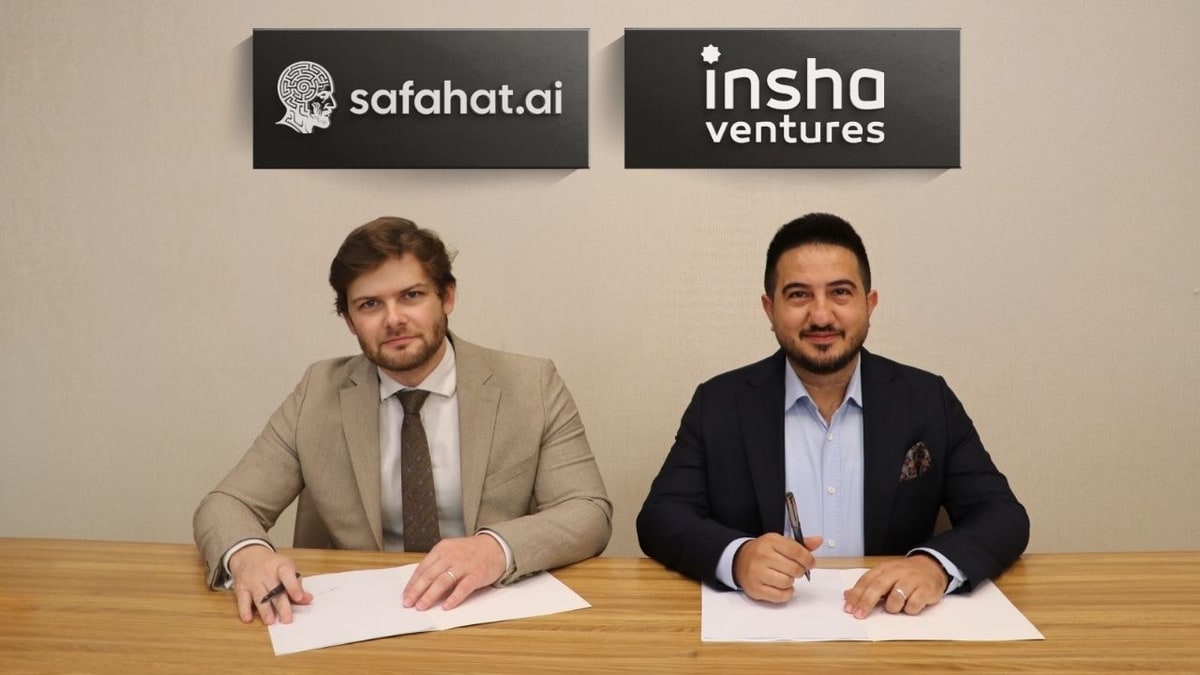
Turkish Legal AI Startup Safahat.ai Secures $590K Pre-Seed Funding for Automation Platform
Read
Turkish AI Unicorn HubX Secures $75M from Point72, Eyes Nasdaq Listing
Read